Why Chest Breathing Keeps Your Neck Locked Up: The First Rib Connection
Have you ever caught yourself holding your breath during a stressful workday, or noticed your shoulders creeping up toward your ears by mid-afternoon?
When individuals experience chronic neck tightness, stubborn upper trapezius discomfort, or a persistent dull ache near the collarbone, the first instinct is often to focus directly on the neck muscles. However, from an osteopathic perspective, local symptoms are frequently the result of structural imbalances occurring elsewhere in the dynamic unit of the body.
One common, overlooked factor in upper body tension is the relationship between respiratory mechanics, chest breathing, and the position of the first rib.
The Structural Mechanics: Scalenes, Breathing, and the First Rib
Understanding why breathing patterns influence neck mechanics requires looking at how the upper torso, rib cage, and cervical spine interact.
The primary muscle designed for quiet, resting respiration is the diaphragm. When breathing occurs efficiently, the lower ribs expand laterally, allowing the neck and upper chest to remain relaxed and neutral.
However, factors like prolonged desk work, postural adaptations, or sustained stress often lead to shallow chest breathing (apical breathing). In this pattern, secondary accessory muscles step in to lift the chest wall:
The Scalene Muscles: These muscle bands attach from the cervical vertebrae in the neck down directly onto the first and second ribs.
The First Rib: Positioned deep beneath the collarbone (clavicle), the first rib forms the top ring of the thoracic cage and acts as a key structural anchor point.
When shallow chest breathing becomes a dominant habit, the scalenes contract repeatedly to lift the rib cage. Over time, this constant upward traction can pull the first rib into an elevated, restricted position.

How First Rib Restriction Impacts Upper Body Balance
Because structure and function are reciprocally interrelated, a restricted or elevated first rib alters the mechanical dynamics of the entire surrounding region:
Cervical Spine Tension: Constant traction from tight scalenes maintains pulling forces on the middle and lower neck, reducing natural side-bending and rotational movement.
Shoulder Girdle Compensation: When the first rib and upper chest remain elevated, secondary muscles like the upper trapezius and levator scapulae work overtime to stabilize the shoulder girdle, leading to persistent soft tissue tightness.
Neurovascular Pathways: Key nerves and blood vessels passing over the first rib and beneath the collarbone can experience localized mechanical compression or fascial strain when structural space is diminished.
How Osteopathic Manual Therapy Helps Restore Balance
Rather than offering generic home stretches or symptom-focused advice, osteopathic manual therapy focuses on evaluating how your body is functioning as an integrated whole to address the root mechanical drivers of tension.
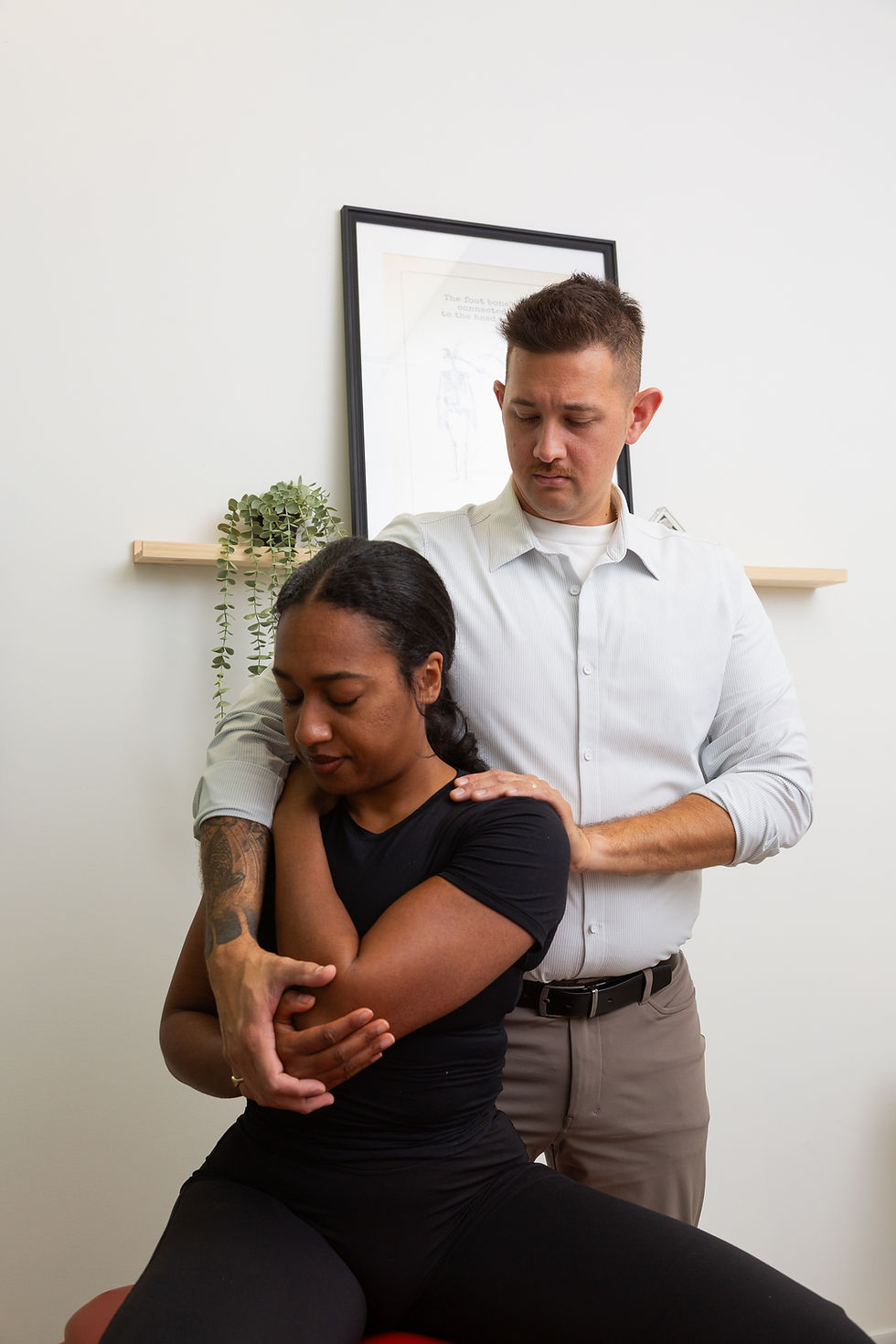
An Osteopathic Manual Practitioner assesses the relationships between joint alignment, fascial continuous tissue networks, and dynamic motion. In cases of stress-induced upper body tension and first rib restriction, manual evaluation and care focus on:
Restoring First Rib Mobility: Gentle manual techniques are applied to encourage the first rib back into its natural position and motion during exhalation.
Releasing Fascial & Scalene Tension: Soft tissue approaches help address tension through the anterior neck, clavicle, and upper chest, easing constant strain on the cervical spine.
Improving Thoracic & Diaphragmatic Dynamics: By releasing restrictions in the thoracic spine and surrounding rib cage, the body is supported in returning to a natural, low-stress diaphragmatic breathing pattern.
By removing mechanical obstacles and promoting fluid, structural balance, osteopathic manual therapy supports the body’s innate capability for self-regulation and healthy movement.
Experience Whole-Body Care at The Osteo Lab in Barrie, Ontario
If persistent neck stiffness or upper chest tension is affecting your daily comfort, an osteopathic approach can help identify and address the structural factors involved.
Practice: The Osteo Lab
Location: Barrie, Ontario
Practitioner: Kyle Malkamaki, Osteopathic Manual Practitioner
[Book Your Assessment at The Osteo Lab Today https://www.theosteolab.com/book-online]
Disclaimer: This blog post is for educational purposes only and does not replace personalized medical advice, clinical evaluation, or diagnosis from a qualified healthcare provider.


Comments