The Hidden Culprit Behind Shoulder and Neck Tension: Your Mid-Back
How Thoracic Spine Stiffening Drives Neck and Shoulder Pain in Barrie, ON
If you spend your weekdays working at a desk in downtown Barrie, commuting down the 400, or spending hours looking down at screens, you are likely no stranger to persistent neck tightness or shoulder knot tension.
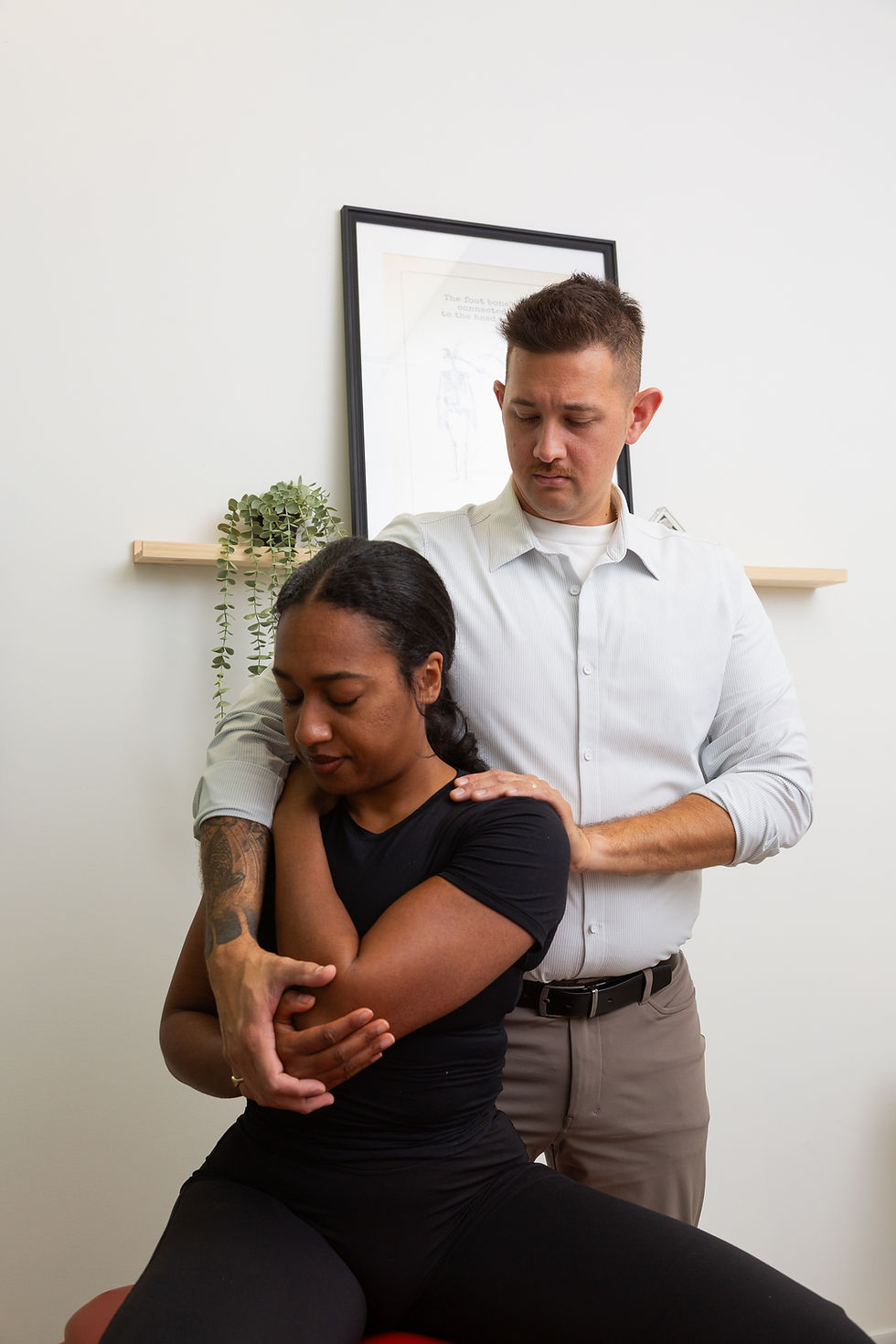
When upper-body discomfort strikes, most people naturally stretch their neck or rub their upper back muscles. However, in manual therapy, we rarely look at the site of pain in isolation. Very often, ongoing neck and shoulder strain isn't purely a neck problem—it is a reflection of restricted motion in your thoracic spine (your mid-back).
The Body as an Interconnected Unit
A core tenet of osteopathy is that the body functions as a single, integrated unit. Dynamic health depends on how smoothly different structural regions

communicate and support one another during movement.
Your thoracic spine consists of the 12 vertebrae attached to your rib cage. It is engineered to flex, extend, and rotate, creating a stable yet adaptable foundation for your neck, head, and shoulder blades.
When prolonged sitting, cold winter posture, or repetitive daily habits cause your mid-back to lose its natural mobility, your neck and shoulders are forced to compensate:
Forward Head Stance: As the mid-back slumps or stiffens, the neck must over-extend to keep your eyes looking forward. For every inch your head shifts forward, extra leverage places significant strain on your cervical spine muscles.
Altered Shoulder Mechanics: Your shoulder blades (scapulae) glide directly over the back of your rib cage. When the thoracic spine becomes rigid, the shoulder blades tilt awkwardly, reducing joint clearance and causing surrounding tissues to overwork.
Structure and Function: The Ripple Effect Across the Upper Body
In osteopathic manual therapy, we recognize that structure and function are reciprocally interrelated. When structural movement becomes restricted, physical function inevitably changes. Stiff mid-back mechanics create a domino effect throughout your whole upper body:
Restricted Diaphragmatic Breathing: A rigid rib cage limits the full expansion of your diaphragm. As a result, your secondary breathing muscles—like the scalenes in your neck—are recruited to pull up on the ribs, leading to chronic neck tightness.
Compensatory Strain: When mid-back joints lock up, the neck and low back must move excessively to make up for lost range, frequently resulting in local fatigue, joint irritation, and muscle spasms.
Restoring Balance at The Osteo Lab in Barrie
Your body possesses an inherent capability to self-regulate and adapt once structural restrictions are removed. Managing recurring neck and shoulder stiffness isn't just about massaging where it hurts—it is about restoring harmonious movement across your spine, ribs, and shoulders as a complete system.
If upper-body tension or mid-back stiffness is affecting your daily activities, active lifestyle, or work productivity, a personalized assessment can help locate and address the underlying mechanical restrictions.
Listening to your body is the first step toward long-term relief. Consult a qualified Osteopathic Manual Practitioner for individualized, whole-body care tailored to your unique movement patterns.
Disclaimer: This blog post is for educational purposes only and does not replace personalized medical advice or clinical evaluation.


Comments